Cards & cash
Cards are optional purchases during the market phase. Buy for a specific purpose, after setting aside your next auction budget. Demo v0.1.6 listed Robin Hood at $100 to steal $250; that is a demo rule, not a confirmed Early Access price.
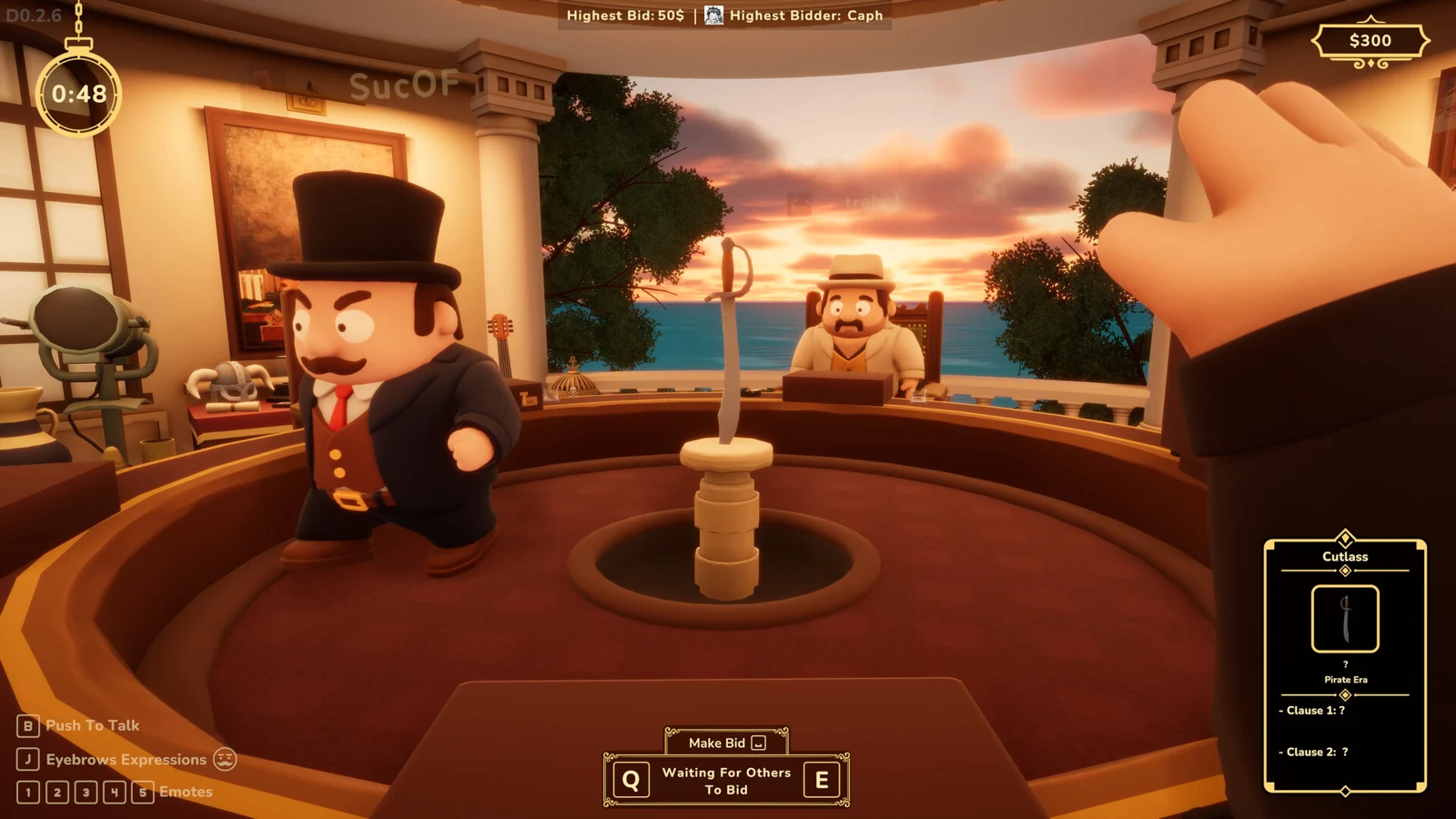
Cards give you another way to influence a match, but their purchase competes with every other use of your money. A card that helps in one situation can still be an awkward buy if it leaves you unable to participate in the next auction. Start with a budget and a purpose, then choose a card.
When can you buy cards?
The official game description places optional card purchases in the market phase, after the players have taken their seller turns. Cards can strengthen your position or disrupt other players. The system is optional: you can make a market decision without buying a card just because the shop is available.
Read the text in your current build before spending. Check the purchase cost, target, effect and any requirement for using it. Buying a card and successfully applying its effect are separate steps. A description of a powerful effect does not mean it works at every time or against every situation.
The official game page says the full game expands the demo’s limited selection. A short list taken from an old demo is therefore not a complete Early Access card catalogue. This guide concentrates on the cash decision and the specifically documented Robin Hood changes.
Robin Hood in demo v0.1.6
The developer’s demo v0.1.6 announcement changed both the amount stolen and the card’s price. It also increased starting cash.
| Rule | Demo v0.1.6 | Version boundary |
|---|---|---|
| Robin Hood purchase cost | $100 | Demo balance; recheck in Early Access |
| Amount stolen from an opponent | $250 | Previously $500 according to the patch |
| Starting cash per player | $2,000 | Previously $1,000 according to the patch |
Do not pair the old $500 theft with the new $100 cost. That combination produces a misleading account of the card’s balance. Similarly, starting-money advice based on $1,000 applies a different constraint from the v0.1.6 economy.
In a simplified example, if a $100 purchase is followed by a successful transfer of the full $250, your cash changes by +$150 overall. That arithmetic describes the two stated amounts, not a promise of profit in every match. The announcement does not fully specify what happens when the target cannot pay, every eligibility condition, or every interaction with other effects. Inspect the actual card rather than assuming those cases.
Reserve cash before buying
Use three buckets: money for your next auction, money you intend to keep unspent, and money available for a card. This is a planning method, not an extra mechanic in the game. All three come out of the same cash balance.
For example, suppose you have $1,200 and choose to keep $300 untouched. If you also want up to $700 available for the next auction, only $200 is available for a card purchase. Spending $400 would mean changing one of those plans. Decide which plan changes before buying; do not discover the trade-off halfway through bidding.
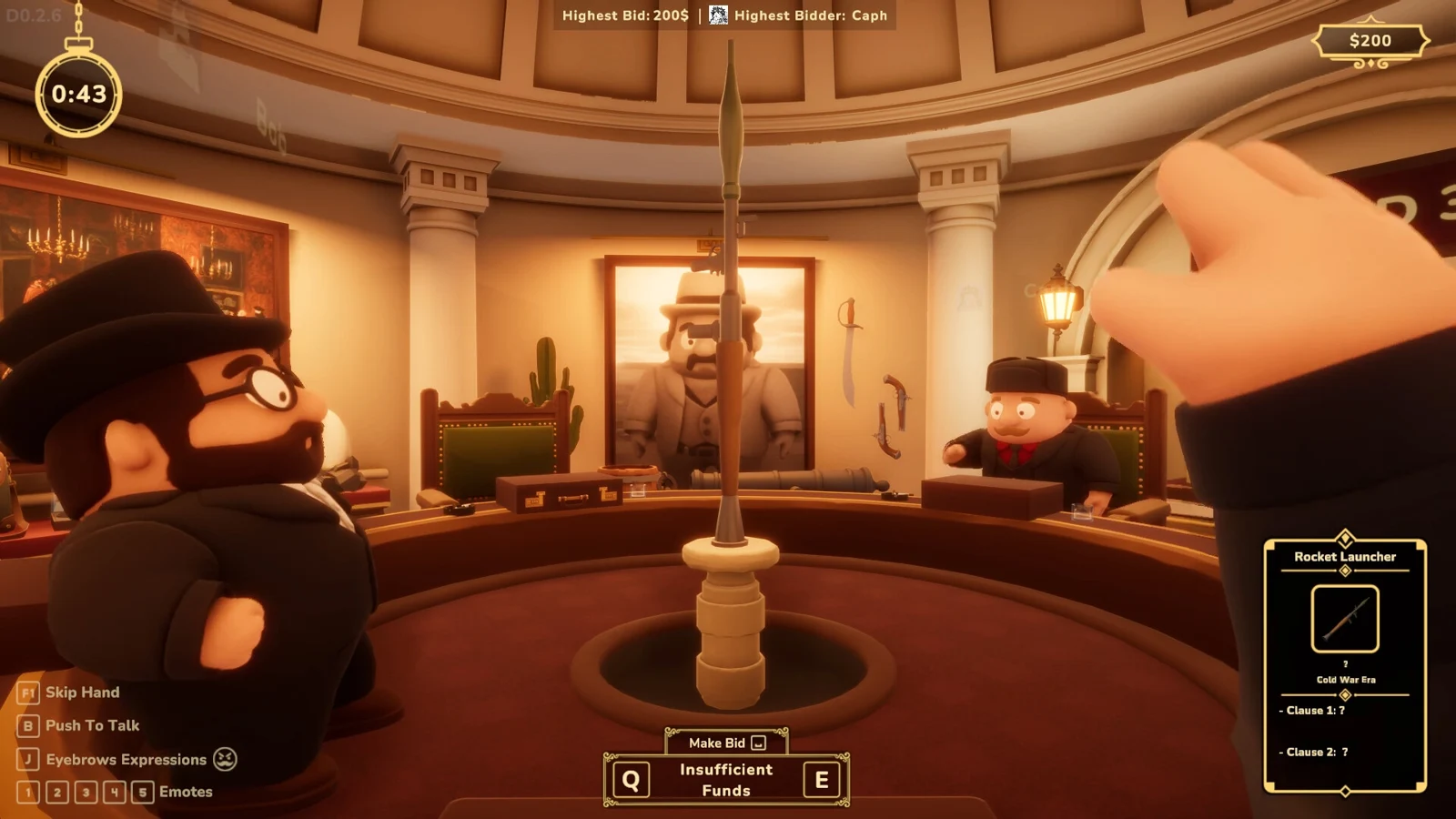
Inventory value is not the same as spendable cash. If you plan to sell an item to fund a card, check the actual market offer first. An estimated resale value or an untriggered bonus cannot pay the shop immediately. The market checklist helps separate those choices.
Give each card a job
Before purchasing, finish this sentence: “I want this card because, if this situation happens, I can use its stated effect to change this outcome.” If you cannot name the situation, preserve your cash until you understand it better.
- Identify the problem you are trying to solve.
- Read the entire effect, including conditions and target restrictions.
- Confirm that the intended target or situation can actually occur.
- Compare the card cost with the cash you need for another auction.
- After using it, compare the actual result with the card’s wording.
Avoid deciding only from the size of the effect. A smaller but usable action can be more useful than a large effect that never becomes relevant. This is especially true when you are learning: a clear interaction is easier to understand than a chain of uncertain assumptions.
Do cards replace bidding strategy?
They add options, but they do not remove the seller’s information advantage. Do not overpay for a lot on the assumption that a later card will rescue it. That purchase can leave you paying for both the item and the rescue plan while its hidden clauses still affect your position.
If a seller pressures you with what a rival might do, return to your own budget. You do not have to win every exchange to stay in a match. A saved card budget can remain cash for a later lot; money already spent cannot serve both purposes at once.
For the underlying purchase decision, read item values, clauses and bidding. For a failed card interaction, note the build, card wording, target and sequence of events before using the support checklist. The developer acknowledged card and clause bugs during the early demo; that history does not confirm a bug in the current release.